What Causes Moisture to Get Trapped Behind Siding, and How Can It Be Prevented?
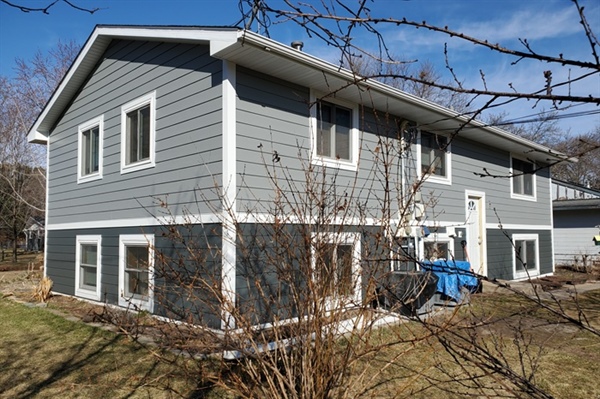
Moisture trapped behind exterior cladding is one of the most common and destructive building envelope failures in residential construction. What often begins as a minor installation oversight—an improperly lapped house wrap seam, missing flashing at a window head, or inadequate drainage detailing—can lead to long-term structural damage, mold growth, insulation degradation, and interior air quality concerns. Modern siding systems are designed to manage water, not block it entirely. When components within the wall assembly fail to work together as intended, bulk water and vapor can accumulate behind the exterior cladding, especially in freeze-thaw climates like the Upper Midwest.
Understanding why moisture becomes trapped requires examining each layer of the wall system, from weather-resistive barriers and flashing to installation methods and ventilation design. In this article, we will examine how improper house wrap contributes to water intrusion, the critical role of flashing and sealing around penetrations, how gaps and installation errors allow moisture entry, why ventilation and drainage planes matter, and the proven strategies that prevent long-term damage. As a leading exterior contractor serving homeowners throughout the region, Siding Unlimited recognizes that effective moisture management begins with correct design, material selection, and disciplined installation practices.
How Improper House Wrap and Weather Barriers Lead to Moisture Intrusion
House wrap and weather-resistive barriers (WRBs) are designed to serve as the secondary line of defense against bulk water intrusion while allowing vapor to escape from within the wall assembly. When properly installed, these materials create a continuous drainage layer that directs water downward and out of the system. Problems occur when seams are not overlapped correctly, fastener penetrations are left unsealed, or reverse shingling allows water to migrate behind the barrier instead of over it. Even small discontinuities can allow wind-driven rain to bypass the protective layer and reach the sheathing.
Field studies conducted by building science researchers have shown that improper lapping at horizontal seams and inadequate integration with flashing are among the most common sources of concealed moisture damage. In colder climates, trapped moisture within wall cavities can lead to sheathing rot, fastener corrosion, and reduced insulation performance. Vapor-permeable wraps must also be selected based on climate zone requirements; materials with improper permeability ratings can contribute to condensation accumulation during seasonal temperature shifts.
Correct installation requires shingle-style layering, integration with window and door flashing, proper taping of seams, and termination at foundation transitions. The outer cladding, including materials such as vinyl, fiber cement, or engineered wood siding, is not waterproof by itself. It relies on the WRB behind it to manage incidental water. When that layer is compromised, moisture intrusion becomes a systemic issue rather than a surface problem.
The Role of Flashing and Sealing Around Windows, Doors, and Penetrations
Openings in the building envelope represent the highest-risk locations for water intrusion. Windows, doors, utility penetrations, and vent terminations interrupt the continuity of the wall system and require precise flashing integration. Flashing components are intended to collect and redirect water to the exterior surface before it can reach structural components. When head flashing is omitted, sill pans are improperly installed, or sealants are inconsistently applied, water is able to migrate into framing cavities.
Research from the Building Science Corporation and the U.S. Department of Energy confirms that the majority of moisture failures originate at penetrations rather than in field areas of siding. Improper sequencing—such as installing house wrap over head flashing instead of beneath it—creates reverse laps that funnel water inward. Sealants alone are not a reliable long-term defense, as they degrade under UV exposure and thermal movement. Mechanical flashing, properly integrated with the WRB, provides a more durable solution.
Effective moisture control around openings requires sloped sill flashing, end dams, continuous head flashing, and sealed fastener penetrations. Integration with trim components must maintain a drainage path so that incidental water is not trapped behind the cladding. These details are essential in preventing concealed moisture accumulation within wall cavities.
Why Poor Siding Installation and Gaps Allow Water to Penetrate Walls
Exterior cladding systems are engineered to shed water, not resist hydrostatic pressure. When siding panels are improperly fastened, overdriven, or installed without required expansion gaps, the material cannot move with temperature fluctuations. This restriction can create warping, cracking, and joint separation that allows wind-driven rain to enter behind the panels. Improperly aligned butt joints and insufficient overlap further increase vulnerability.
In addition to expansion issues, inadequate fastening patterns reduce wind resistance and create openings during storm events. Gaps at corner posts, trim intersections, and soffit transitions can serve as entry points for water infiltration. Once behind the cladding, moisture relies on the underlying drainage system to escape. If that system is absent or compromised, water accumulates against the sheathing.
Installation guidelines published by manufacturers specify fastener type, spacing, clearance tolerances, and joint treatment methods. Deviation from these standards significantly increases risk. A properly installed cladding system works in conjunction with the WRB and flashing to create a layered moisture defense strategy.
How Lack of Ventilation and Drainage Planes Traps Moisture Behind Exterior Cladding
Modern building science emphasizes the concept of a drainage plane—a continuous pathway that allows gravity to direct water downward and out of the wall assembly. Without this plane, incidental moisture has no exit route. In many older or improperly detailed systems, cladding is installed directly against the WRB without a gap or drainage mat, limiting drying potential.
Ventilation behind exterior cladding improves drying capacity by promoting convective airflow. Rainscreen systems, which create a small air cavity between the siding and the WRB, significantly reduce moisture accumulation by allowing both drainage and evaporation. Studies in cold climates demonstrate that ventilated assemblies experience lower sheathing moisture content compared to direct-applied systems.
When ventilation is absent, trapped moisture can persist for extended periods, increasing the likelihood of fungal growth and structural deterioration. Properly designed assemblies incorporate drainage mats, furring strips, or engineered rainscreen products to maintain airflow and drying performance.
Preventative Strategies: Best Practices for Moisture Control in Modern Siding Systems
Effective moisture control requires a systems-based approach. Each component—WRB, flashing, cladding, ventilation cavity, and sealant—must function as part of an integrated assembly. Best practices include climate-appropriate vapor-permeable barriers, mechanically integrated flashing, proper fastener selection, and ventilation detailing that supports drying. Material compatibility is also critical; incompatible sealants and barrier systems can fail prematurely.
Routine inspection and maintenance further reduce risk. Sealants around penetrations should be evaluated periodically for cracking or separation. Fasteners must remain secure and corrosion-resistant. Drainage pathways at the base of the wall should remain unobstructed to allow water to exit freely. In freeze-thaw regions, maintaining a continuous air barrier also reduces condensation risk within the wall cavity.
For homeowners seeking guidance on comprehensive exterior envelope performance, Siding Unlimited provides expertise grounded in building science principles and climate-specific installation practices. Addressing moisture management proactively protects structural integrity, indoor air quality, and long-term property value.
Professional Guidance for Long-Term Exterior Protection
Moisture management failures rarely result from a single defect. They stem from small installation errors compounded over time. Siding Unlimited works with homeowners throughout the region to evaluate and correct exterior envelope vulnerabilities. Their team applies manufacturer specifications and climate-appropriate detailing standards to prevent recurring moisture issues.
Whether addressing improper house wrap installation, flashing integration, drainage design, or full exterior upgrades, professional evaluation reduces long-term structural risk. Homeowners can call 651-681-5000 to discuss concerns or request an inspection. Additional information about services and consultation options is available when you contact us.