What Are the Most Durable Siding Materials for Minnesota and Wisconsin Homes?
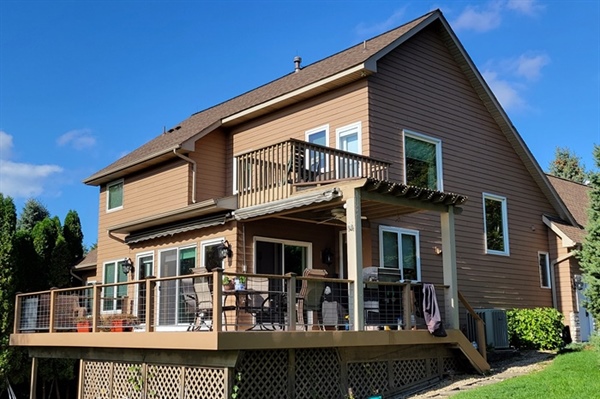
Minnesota and Wisconsin homeowners know that siding is more than a design choice. It is the first barrier against subzero temperatures, heavy snow loads, wind-driven rain, freeze-thaw cycles, and hail. In regions where temperatures regularly drop below zero and winter storms can last for days, siding materials must withstand moisture expansion, thermal contraction, and repeated impact without cracking, warping, or deteriorating. Choosing the most durable siding material means understanding how each option performs under these exact conditions.
Homeowners researching long-lasting siding options often ask which materials resist extreme winter weather, how durability compares to maintenance requirements, and whether products like fiber cement or engineered wood perform better in cold climates. Questions also arise about hail resistance and which products carry meaningful long-term durability ratings. The following guide examines these factors in depth, focusing on proven performance in Upper Midwest conditions.
Siding Materials That Best Resist Extreme Winter Weather in Minnesota and Wisconsin
Extreme winter weather places unique stress on exterior cladding systems. Materials must tolerate rapid freeze-thaw cycles, which occur when moisture penetrates a surface, freezes, expands, and then thaws repeatedly. Fiber cement siding performs well under these conditions because it is composed of cement, sand, and cellulose fibers that resist moisture absorption and dimensional instability. Unlike natural wood, it does not swell or shrink significantly when exposed to prolonged moisture and subfreezing temperatures.
Steel siding also demonstrates strong winter performance. Galvanized or Galvalume-coated steel resists cracking in low temperatures and does not become brittle like certain vinyl formulations can during extreme cold. Steel panels are manufactured to interlock tightly, reducing wind uplift risk during winter storms. Insulated vinyl siding products can perform adequately when engineered for cold climates, but lower-grade vinyl may become brittle below freezing, increasing the risk of cracking from impact.
Engineered wood siding products are manufactured with resins and treatments designed to resist moisture infiltration. When properly installed with effective flashing and water management systems, they can perform reliably in cold climates. Installation quality remains critical. Proper fastening, expansion gaps, and moisture barriers determine whether siding will withstand Minnesota and Wisconsin winters without premature failure.
Durable and Low-Maintenance Siding Options for Upper Midwest Homes
Durability and low maintenance are closely linked but not identical. A durable siding material must resist structural damage, while a low-maintenance material reduces the need for repainting, sealing, or frequent repairs. Fiber cement is widely recognized for balancing both qualities. It resists rot, insect damage, and fire, and factory-applied finishes often carry extended warranties against peeling and fading.
Engineered wood siding offers another balance between durability and maintenance. Advanced manufacturing processes bond wood strands with waterproof resins and protective overlays. These treatments improve resistance to fungal growth and moisture absorption. Compared to traditional wood siding, engineered wood requires less frequent painting and is less susceptible to warping when maintained according to manufacturer guidelines.
Steel siding provides minimal maintenance requirements because it does not rot, warp, or attract pests. Modern coatings protect against corrosion and color fading. Homeowners evaluating long-term performance often review detailed product specifications and installation standards available through professional exterior contractors such as siding specialists who work extensively in cold-weather regions.
Fiber Cement vs. Engineered Wood Siding in Cold Climate Performance
Fiber cement and engineered wood are frequently compared because both are designed to address moisture and durability concerns common in harsh climates. Fiber cement is dimensionally stable and highly resistant to temperature fluctuation. It does not rely on organic composition for structural integrity, which reduces the risk of rot. Its density also contributes to impact resistance during winter debris events.
Engineered wood siding, by contrast, retains the workability and appearance of natural wood while incorporating resin binders and zinc borate treatments to resist decay and termites. In cold climates, its lighter weight simplifies installation during shorter construction seasons. When installed with proper sealing and edge treatment, engineered wood performs well against moisture intrusion.
The primary performance distinction lies in density and composition. Fiber cement is heavier and generally offers higher fire resistance and impact tolerance. Engineered wood provides greater flexibility and easier cutting in cold conditions. Both products are manufactured to meet strict building codes for northern states, and both require precise installation techniques to achieve full cold-climate durability ratings.
What Makes Certain Siding Materials More Hail-Resistant?
Hail resistance depends on material density, flexibility, and structural composition. Impact-resistant siding products are tested using standardized procedures such as ASTM impact testing. Materials that disperse energy rather than concentrate force are less likely to crack or puncture. Fiber cement’s dense composition provides strong resistance against moderate hail impact, though extremely large hail can damage nearly any material.
Steel siding performs well in hail events because metal can dent without fracturing. While cosmetic dents may occur, structural penetration is rare when panels are properly gauged. Some engineered wood products are rated for impact resistance due to layered construction and reinforced binders that distribute force across the panel surface.
Vinyl siding performance during hail depends heavily on thickness and formulation. Thicker premium vinyl products with impact-modified polymers perform better than entry-level options. Building codes and insurance classifications often reference UL 2218 impact ratings, which categorize products from Class 1 to Class 4. Class 4 represents the highest tested impact resistance and is commonly sought in hail-prone regions.
Siding Products with Long-Term Durability Ratings and Warranties
Long-term durability ratings are typically reflected in manufacturer warranties and third-party testing certifications. Fiber cement siding products often carry limited warranties of 30 years or more for substrate integrity, with separate warranties covering factory finishes. These warranties are based on resistance to rot, insect damage, and dimensional instability under normal conditions.
Engineered wood siding products frequently include 25- to 50-year limited warranties, depending on the brand and product line. These warranties typically cover substrate failure, fungal resistance, and manufacturing defects. Steel siding manufacturers also provide extended warranties against corrosion and coating breakdown, sometimes extending several decades.
Warranty duration alone does not define durability. Proper installation, flashing integration, and moisture management directly affect whether a product performs according to its rated lifespan. Homeowners researching manufacturer specifications often review detailed performance documentation through resources such as Siding Unlimited to understand warranty terms and durability standards.
Work with Experienced Siding Professionals in Hammond, WI
Choosing siding that withstands extreme winters, balances durability with maintenance, resists hail, and carries strong warranty protection requires both product knowledge and installation expertise. Siding Unlimited specializes in exterior solutions designed for Upper Midwest conditions. Their team evaluates material performance, structural compatibility, and moisture management systems to support long-term exterior protection.
Homeowners can discuss fiber cement, engineered wood, steel, and insulated siding options directly with experienced professionals who understand Minnesota and Wisconsin climate demands. For product comparisons, installation standards, and warranty details, contact Siding Unlimited at 651-681-5000 or visit their contact us page to schedule a consultation.